




The patient billing page brings together everything related to a patient’s charges, payments, subscriptions, payment methods, and invoices.
From here, you can collect payments, add charges, manage auto-charge, request payment information, review billing history, and keep track of outstanding balances.
You can open a patient’s billing page in two ways:
- Go to Billing > Patients, then select the patient.
- Open the patient’s chart and select Billing.
At the top of the page, you’ll see a summary of the patient’s current billing status, including their outstanding balance, overdue balance, and auto-charge status.
What’s on the Billing Page?
The billing page is organized into sections for:
- Subscriptions
- Bank Accounts
- Credit Cards
- Invoices
- Yearly Invoices
- Billing History
- Communication Log
- Notes
- Insurance
This gives you a complete view of the patient’s billing activity without leaving their chart.
Adding a Payment
To add a payment, click Add payment in the upper-right corner of the billing page.
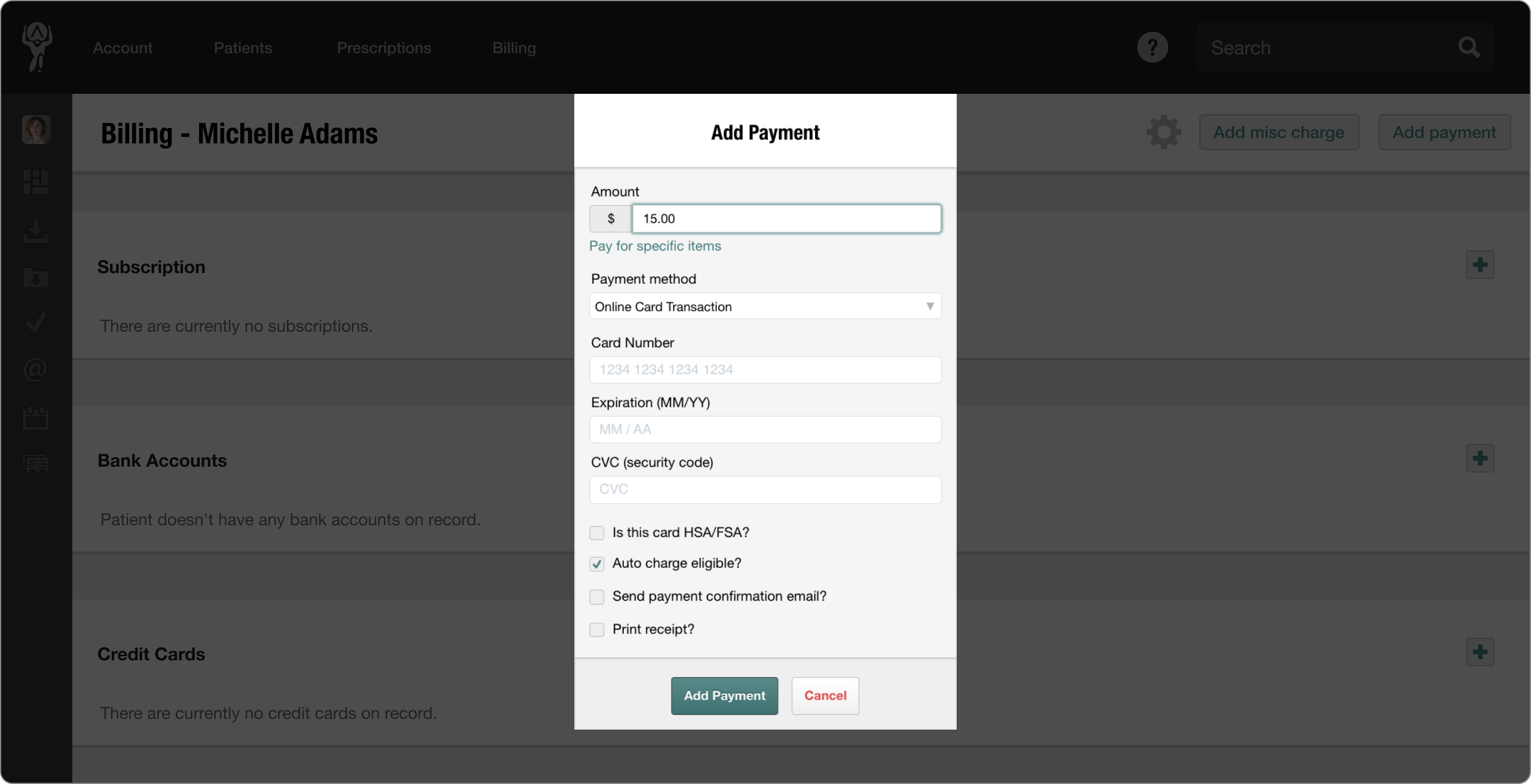
Enter the amount and select the payment method. Depending on the payment information available for the patient, you can process a saved card or verified bank account. You can also record payments made by cash, check, or another offline method.
You can choose to send the patient a payment confirmation after the payment is added.
Adding a Charge
To add a one-time charge, click Add misc charge in the upper-right corner.
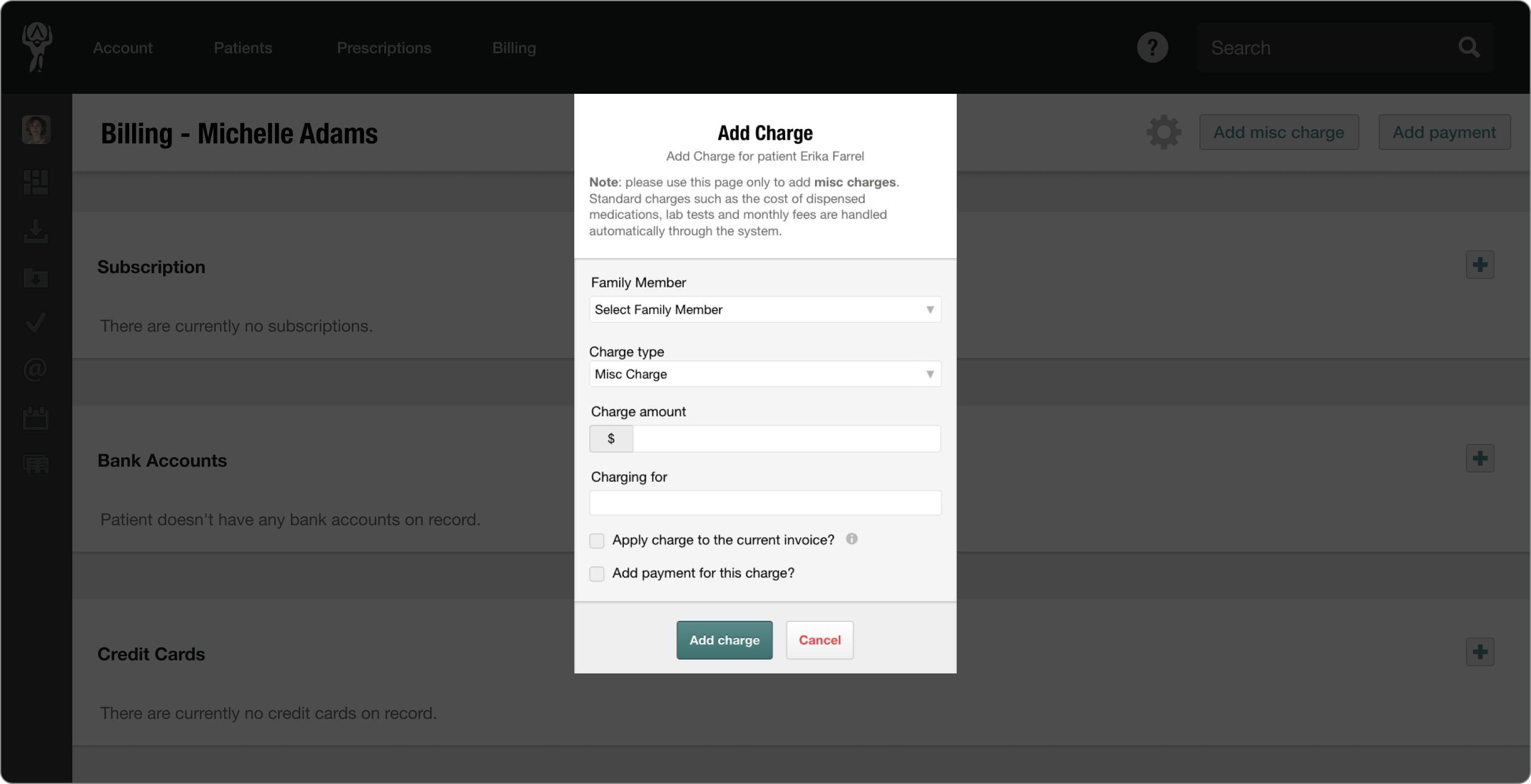
Select the patient or family member the charge applies to, enter the amount and description, and choose whether to add it to the current invoice.
Standard charges, including subscriptions, medications, labs, and configured service fees, are added through their respective areas of Atlas.md.
Managing Payment Methods
The Bank Accounts and Credit Cards sections show the payment methods saved for the patient.
For bank accounts, you can see:
- The account holder’s name
- The bank name
- The account’s last four digits
- Whether the account is eligible for auto-charge
- Its verification status
To request new payment information, click the settings icon in the upper-right corner and select either:
- Request credit card information
- Request bank account information
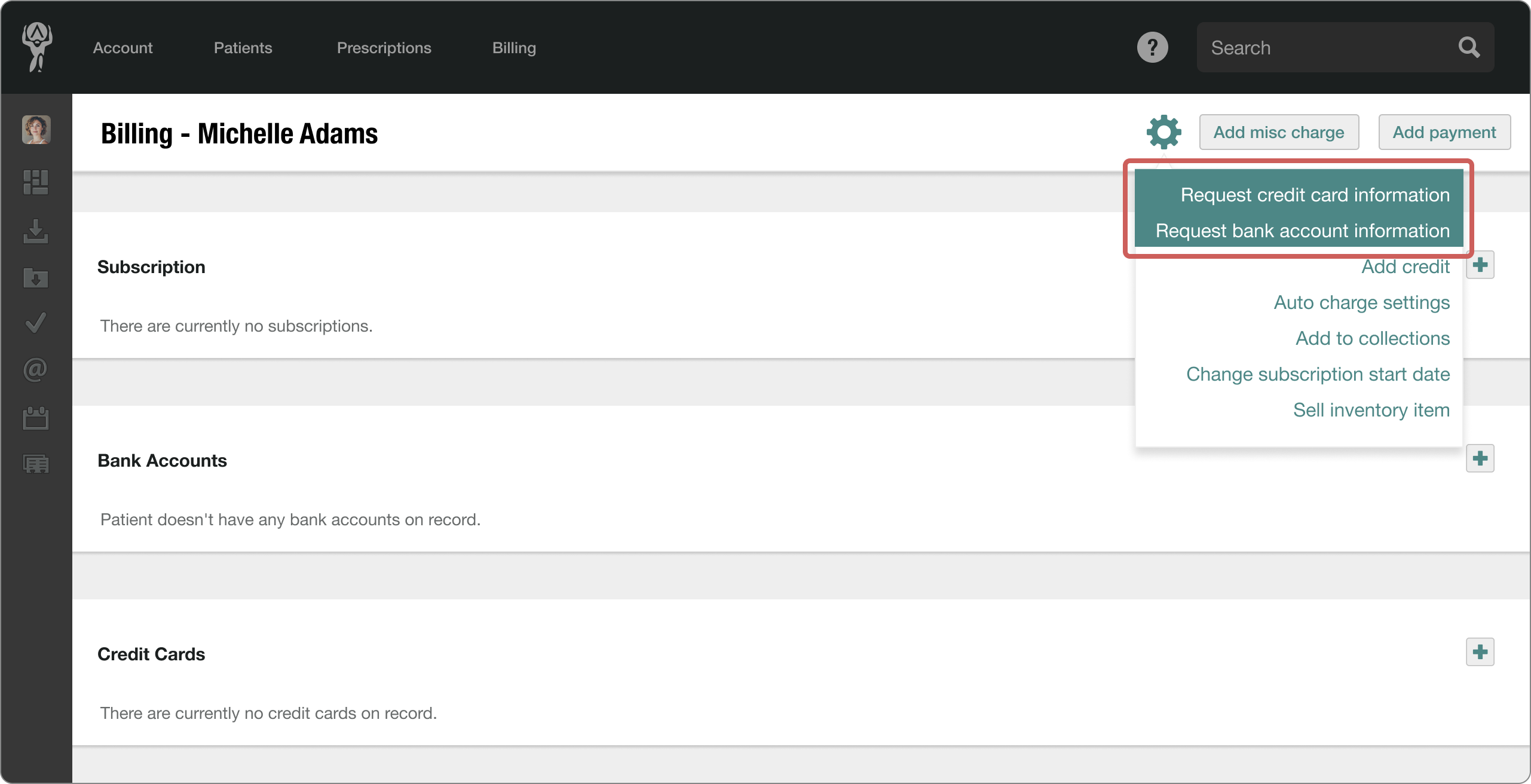
Atlas.md will send the patient a secure request so they can provide and verify their own payment information. Bank-account requests can be sent by email or SMS.
Patients can also add a bank account directly through the Patient Hub.
Learn more about setting up bank payments.
Managing Subscriptions and Auto-Charge
The Subscriptions section shows the patient’s recurring charges. Use the plus icon in this section to add a subscription.
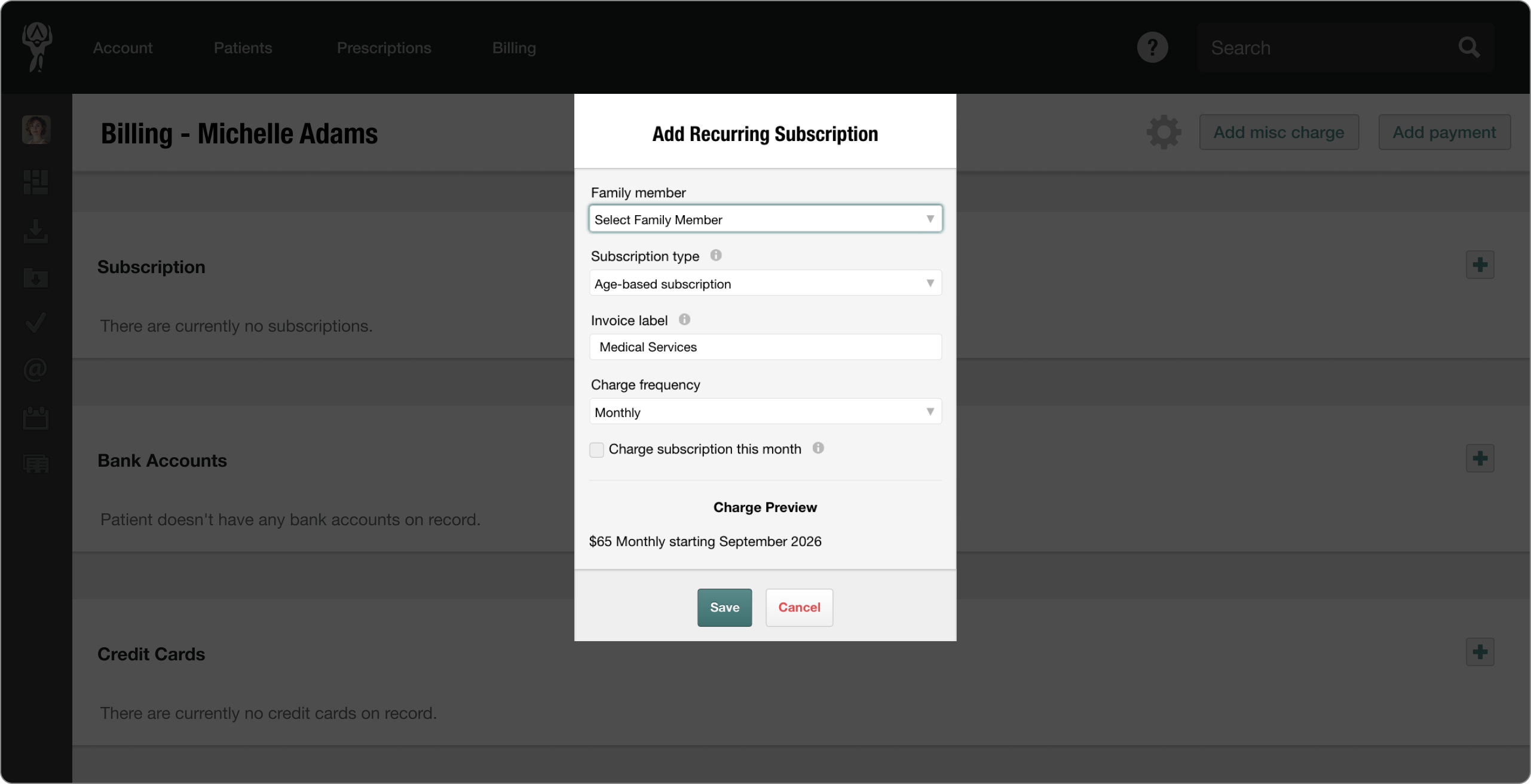
To manage automatic payments, click the settings icon and select Auto charge settings.
From there, you can enable or disable auto-charge and choose when the patient should be charged.
Individual cards and bank accounts must also be eligible for auto-charge before Atlas.md can use them for an automatic payment.
Learn more about managing patient subscriptions.
Reviewing Invoices
The Invoices section shows the patient’s recent invoices, including the amount invoiced, amount paid, and any outstanding balance.
Select an invoice to review it in more detail. You can also view yearly invoices or select See all to open the patient’s complete invoice history.
Learn more about interacting with patient invoices.
Reviewing Billing History
The Billing History section provides a record of the patient’s charges, payments, credits, refunds, and reversals.
Select an entry to see more information or use See all to review the patient’s complete billing history.
Learn more about how refunds work.
Reviewing Billing Communications
The Communication Log records billing-related messages sent to the patient, including invoices and requests for card or bank-account information.
This makes it easier to confirm whether a request was sent and how it was delivered.
Adding Credits, Notes, and Insurance Information
Use the settings menu to select Add credit when you need to reduce the patient’s outstanding balance.
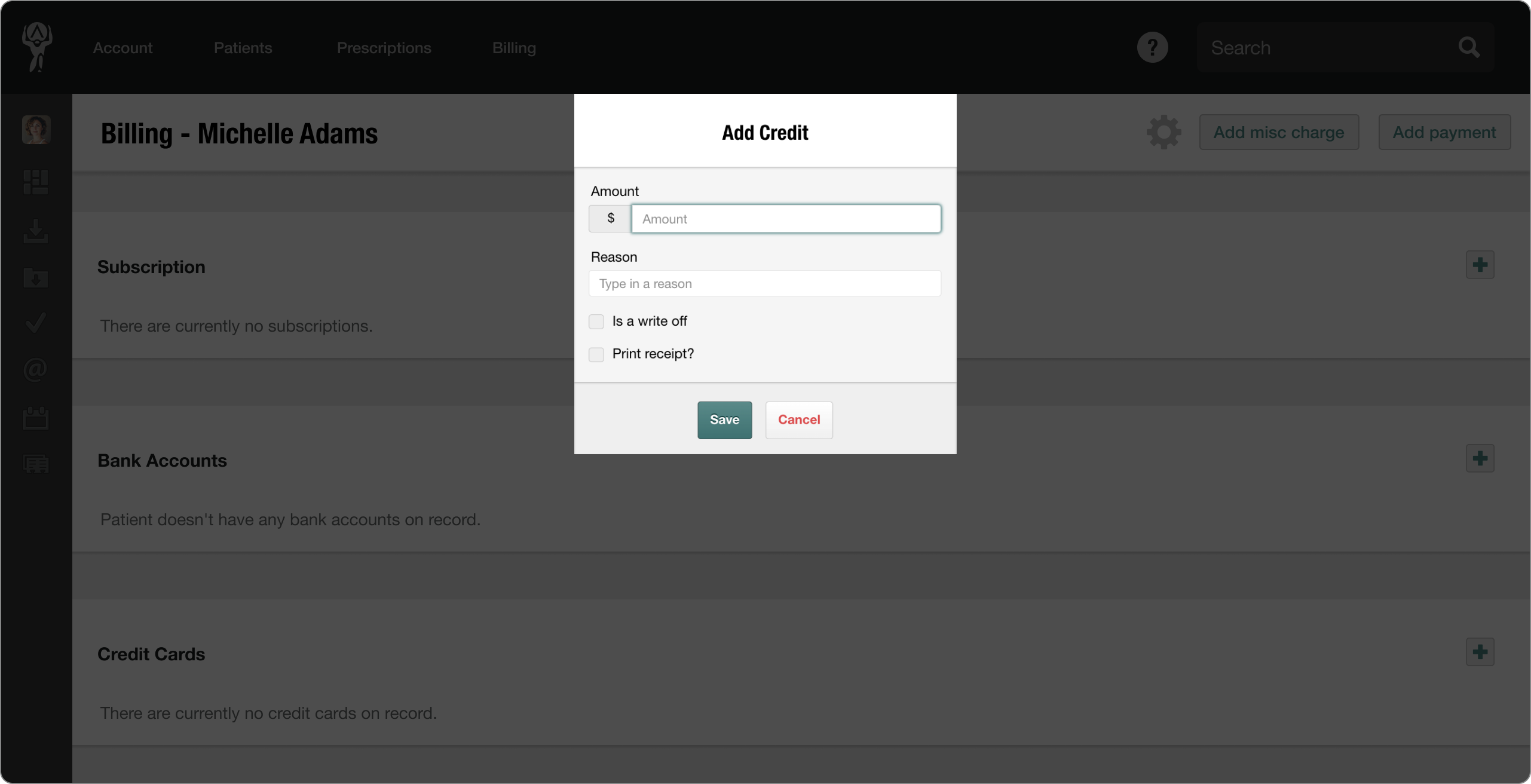
You can also use the plus icons in the Notes and Insurance sections to add billing notes or insurance information to the patient’s account.
Adding a Patient to Collections
To add a patient to your collections list, click the settings icon and select Add to collections.
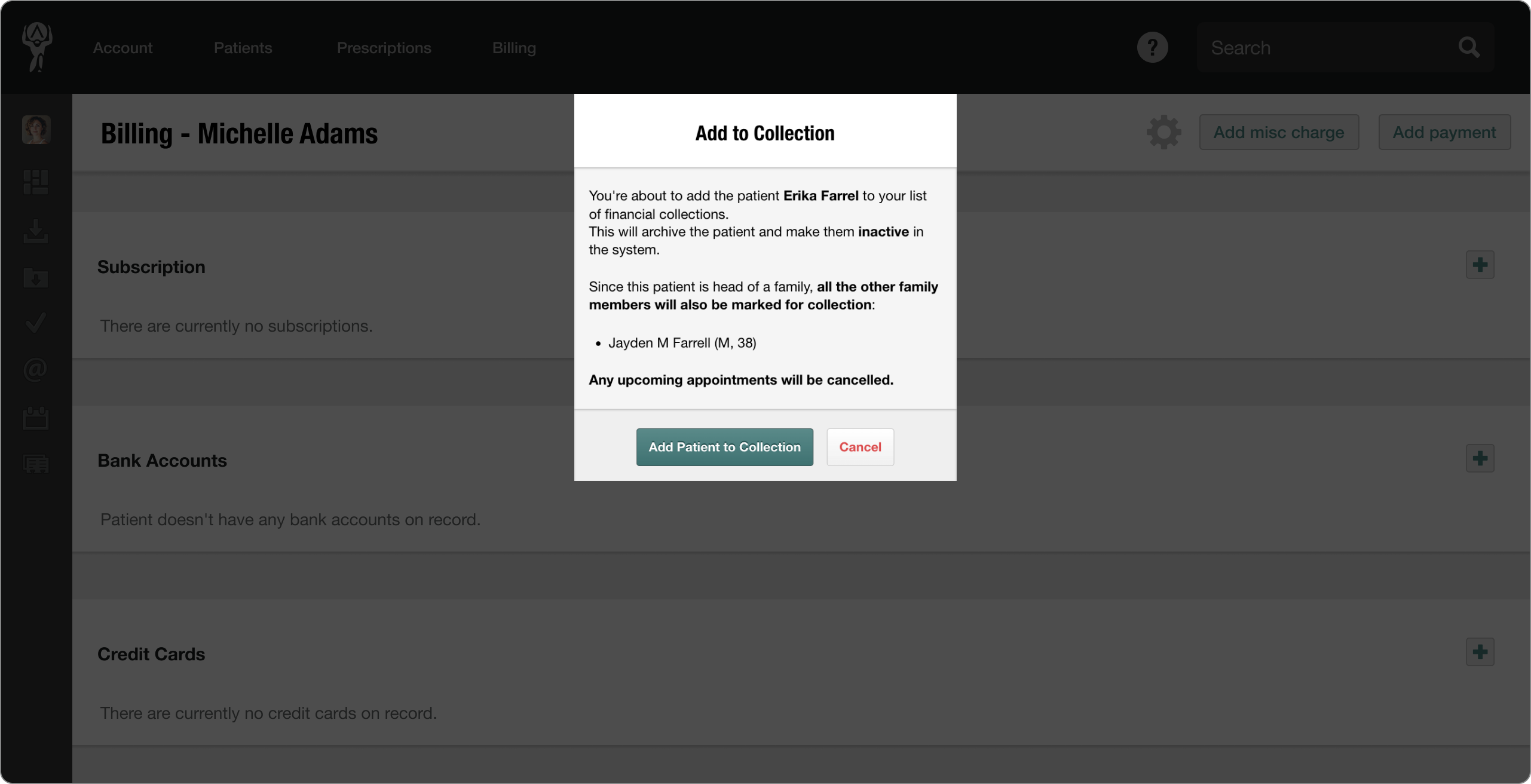
Atlas.md will show a confirmation explaining how this affects the patient and any associated family members before completing the action.
